A sweltering garage can turn routine tasks into a drain on energy, concentration, and physical comfort. Heat trapped in that space may also affect stored paint, tools, workout gear, and appliances. Many households want relief without opening walls or rebuilding ceilings. A practical plan usually starts with four basics: heat gain, insulation, air leakage, and electrical capacity. Once you handle those factors, cooling a garage becomes far simpler and far more effective.
Start With the Space
Before owners install air conditioning in garage areas, they should determine how the room functions, how long it remains occupied, and where heat builds up during the day. A workshop, home gym, or laundry zone creates different thermal demands on the body. That quick review helps prevent poor sizing, patchy cooling, and extra strain on the electrical system.
Check Heat Sources
Direct sun on the garage door often drives the largest temperature rise. Uninsulated walls, exposed rafters, parked vehicles, and spare refrigerators can add steady indoor heat. West-facing glass also raises afternoon temperatures quickly. A brief inspection shows whether the main burden comes from the building shell, indoor equipment, or both. That distinction matters because each source affects cooling performance differently.
Pick a Right-Sized System
Cooling capacity matters more than label claims or brand familiarity. An undersized unit may run for hours and still leave surfaces warm. An oversized model can short cycle, which limits moisture removal and leaves the air feeling clammy. Most garages benefit from sizing based on floor area, ceiling height, insulation, and sun exposure. That method usually provides steadier comfort and more efficient energy use.
Best Fit for Most Homes
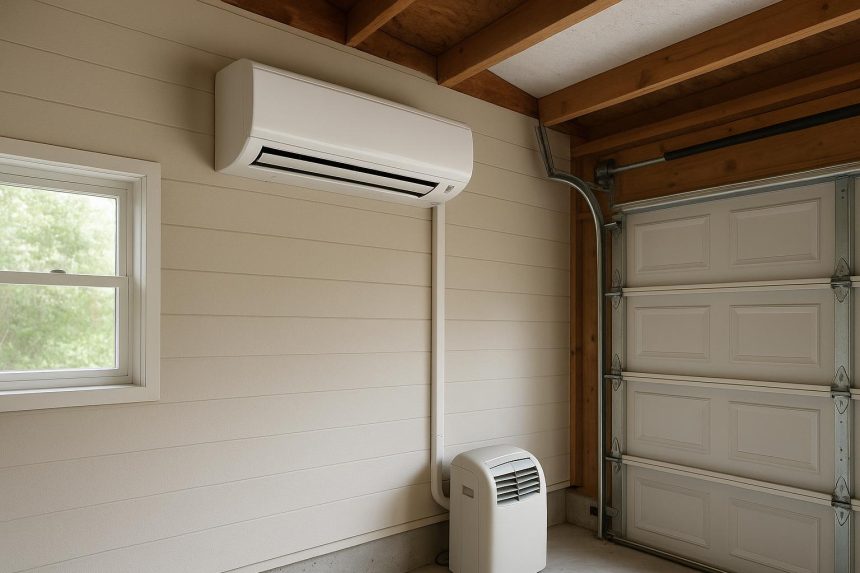
Ductless mini-split systems often suit garages well because they cool efficiently and avoid major structural work. Window units help when an opening already exists. Portable models can serve short-term needs, though they often struggle in extreme heat. The best choice depends on climate, layout, occupancy, and the space’s sensitivity to humidity.
Use Insulation Before Equipment
Insulation can improve comfort more than a larger machine. If walls or ceilings remain unfinished, adding thermal protection may reduce heat transfer right away. An insulated garage door also helps, especially in hot, sunny regions. These upgrades keep cooled air inside longer. They also reduce the load placed on the equipment during the hottest part of the day.
Seal the Leaks
Air leakage can undermine even a strong cooling setup. Gaps around the garage door, service entry, outlets, and framing joints allow hot outside air to slip indoors. Weatherstripping, caulk, and door-bottom seals often correct many of those weak points. A tighter envelope supports more stable temperatures. That stability improves comfort and lowers the chance of the unit running longer than necessary.
Plan Power and Drainage
Every cooling system needs proper electrical support and a safe way to remove condensate. Many garages already share circuits with power tools, chargers, or freezers. Adding a new unit without checking its load capacity can cause tripped breakers or overheating. Moisture management matters too. Poor drainage can leave standing water, damage stored items, and increase the risk of mold in enclosed corners.
Think About Daily Use
Placement affects comfort almost as much as capacity. Supply air should reach the occupied area rather than blow against storage bins or a parked car. Controls also deserve attention. A timer, remote, or programmable setting can cool the room before exercise, repairs, or hobby work begins. That small adjustment often reduces strain because the system starts before the heat becomes intense.
Know When Central Air Fails
Extending the home’s main system into the garage may seem efficient, yet it often creates new problems. Professionals usually size residential ductwork for finished rooms with steadier temperature patterns. A garage behaves differently because heat rises faster, and insulation is often weaker. Sending conditioned air there may reduce comfort inside the house and increase wear on the central equipment.
Budget by Priority
A sensible budget usually starts with the building envelope, then moves to the cooling unit. Sealing leaks and improving insulation often deliver the strongest return for the money spent. After that, owners can compare system costs, efficiency, sound levels, and expected runtime. This sequence helps avoid overspending on equipment that must fight preventable heat gain every warm afternoon.
Conclusion
Adding garage cooling does not require a major rebuild to produce meaningful relief. The strongest results usually come from a stepwise approach, reducing heat entry, tightening the space, confirming electrical support, and then choosing equipment that fits actual use. That order improves temperature control, reduces moisture problems, and limits wasted energy. With the right setup, a garage can become a safer, more usable space year-round.

Lynn Martelli is an editor at Readability. She received her MFA in Creative Writing from Antioch University and has worked as an editor for over 10 years. Lynn has edited a wide variety of books, including fiction, non-fiction, memoirs, and more. In her free time, Lynn enjoys reading, writing, and spending time with her family and friends.