Some job sites just feel easier than others. It’s the same kind of work with the same number of workers, but one crew moves through it easily while the other keeps running into delays. Small delays slow them down all day. Often, the culprit is the choices made before work even begins.
When the setup is right, everything flows differently. There will be fewer stops, less second-guessing, and far fewer “why is this not working” moments.
This is about attachment equipment choices that do not look flashy at first. But once the work begins, they make the biggest difference.
Let’s have a look at the 7 practical choices that help work move the way it should.
1. Choosing Tools That Match the Job
Sometimes the biggest delays aren’t about speed, they’re about using the wrong setup. It happens quite a bit. Even a strong machine can feel frustrating to use if the attachment isn’t suited for what you’re trying to get done.
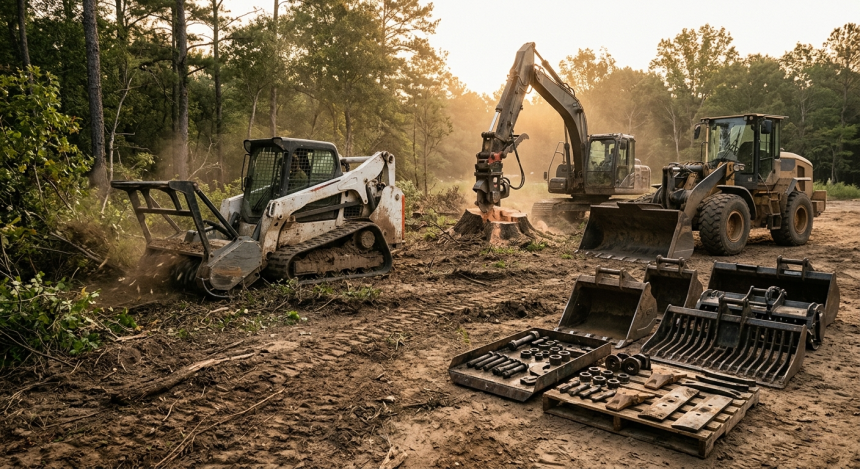
Crews that move smoothly usually take a minute to match their tools with the work ahead. Whether it’s grading, clearing, or lifting, the right attachment keeps things simple. No unnecessary strain, no awkward adjustments, just steady progress.
2. Going for Multi-Use Attachments
Switching between machines all day can get exhausting. It eats into time and breaks the rhythm of the crew. That’s why many contractors lean toward attachments that can handle more than one task.
Instead of juggling multiple tools, they rely on equipment that adapts. It keeps the workflow cleaner and avoids those moments where everyone is just waiting around for the next machine to free up.
3. Keeping Equipment Easy to Swap
Time disappears quickly during changeovers. If it takes too long to switch attachments, the whole crew feels it. Smooth job sites usually have one thing in common. Quick transitions.
Attachments that are easy to swap save way more time than people expect. It might feel like “just a few minutes,” but those minutes sneak away fast. By the end of the day, you’re either done early or still out there wondering where all your time went.
4. Investing in Build Quality That Lasts
There’s a noticeable difference between equipment that holds up and equipment that constantly needs attention. Crews can feel it almost immediately.
Good build quality means your equipment doesn’t act dramatic. Strong edges, solid frames, and properly finished parts just keep doing their thing without fuss. They last longer and don’t pick the worst moment to give up. Because nothing’s more annoying than stopping mid-work to deal with something that should have held on a little longer.
5. Keeping a Few Backup Parts Nearby
Every job site has that one moment. Something small wears out, and suddenly everything pauses. It’s rarely a big part. Most of the time, it’s something simple.
Crews that stay ahead usually keep a small stash of commonly used items close by.
- Extra bolts and fasteners
- Cutting edges or wear parts
- Basic tools for quick fixes
These little backups turn what could have been a long delay into a quick reset. Work gets moving again before the frustration even settles in.
6. Sticking with Equipment That Feels Familiar
Operators work better with equipment they understand. There’s no learning curve slowing them down, no guessing how things work. Just smooth, confident operation.
This is where consistency matters. Using dependable attachment equipment across different jobs helps crews build that comfort over time. The more familiar the setup feels, the faster and cleaner the work gets done.
7. Paying Attention to the Small Details
Small issues are easy to brush off during a busy day. A slightly dull edge or a loose connection doesn’t seem urgent. But over time, these things start slowing everything down. Crews that work smoothly don’t ignore them.
They take a few minutes to check, clean, and fix what needs attention. It doesn’t take much effort, but it keeps the whole setup working better till the end of the day.
Wrapping It Up
No job site is always ten on ten, even though the crew is experienced. There will always be delays, a bit of chaos here and there. But the things that really bring changes in how often those moments show up are how well your crew can prepare for them. With better preparation and the right equipment, our work can run smoothly without glitches.
They may not stand out right away, but they really make a difference when it counts. By the time you realize that, these small decisions create a better working environment for everyone.
So it really comes down to choosing the right equipment that makes better choices hat helps things run smoothly without adding extra complications to an already busy day.
______________________________________________________________________________

Lynn Martelli is an editor at Readability. She received her MFA in Creative Writing from Antioch University and has worked as an editor for over 10 years. Lynn has edited a wide variety of books, including fiction, non-fiction, memoirs, and more. In her free time, Lynn enjoys reading, writing, and spending time with her family and friends.