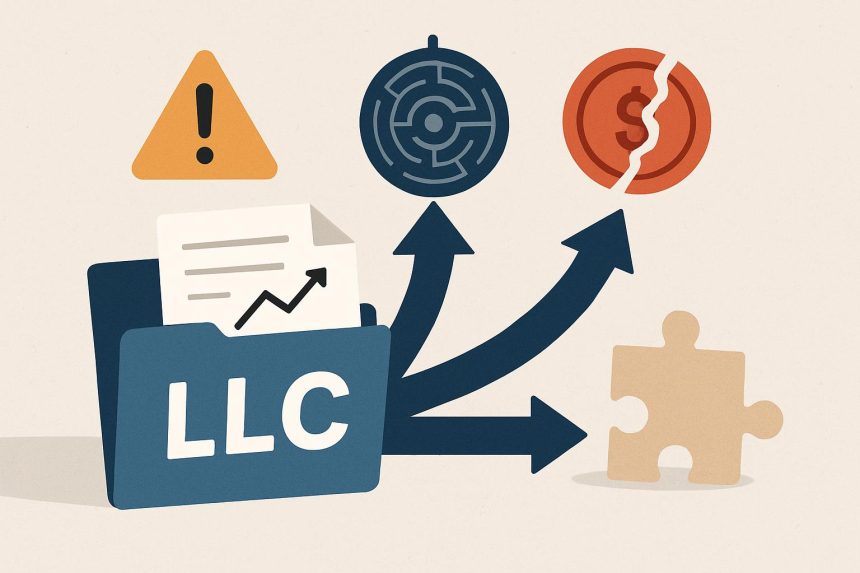
You finally opened your doors for business! It’s a moment that feels like a triumph, yet the first twelve months of operating a Limited Liability Company (LLC) hardly resemble a victory lap.
Most new entrepreneurs stumble not because they lack passion, but because the administrative machinery of a business calls for a totally new skillset. It’s often miles away from the craft that inspired your venture.
You must transition from a practitioner to a strategist overnight. This guide prepares you for the inevitable friction of your first year and offers specific, actionable maneuvers to keep your entity thriving and your liability protected.
Cash flow and financial management
Don’t underestimate how quickly upfront costs—from website hosting to initial inventory—can deplete your business account before the first invoice clears. And if you accidentally mix grocery money with client payments, you pierce the corporate veil and could risk your personal assets in a lawsuit.
You should:
- Open a dedicated business checking account immediately.
- Set aside 20% of every incoming dollar into a separate buffer savings account.
- Schedule one day each week to record every transaction in a small business accounting software like QuickBooks or Xero.
Following the Small Business Administration’s guidelines on financial management ensures you maintain the liquidity necessary to survive the months where revenue cycles dip unexpectedly.
Taxes and compliance obligations
The IRS doesn’t withhold your taxes from your paycheck anymore.
Instead, you need to calculate and pay your own way through quarterly estimated tax payments. If you fail to track your mileage accurately, it’s possible that you’ll overpay the government by thousands of dollars.
You should use a dedicated mileage tracker app to log business travel and keep digital copies of every receipt over $75.
If you need some help estimating your self-employment tax obligations, you can the IRS website to download Form 1040-ES.
Legal and administrative requirements
Your LLC status is a contract with the state, and it’s one you must uphold to keep your liability protection. Forgetting to file your Annual Report or Statement of Information is a mistake that can lead to the state dissolving your company.
You need to draft a formal Operating Agreement even if you are a solopreneur, because this document proves the business is a separate legal entity. Full compliance is an imperative part of learning how to start an LLC in any state.
Check your Secretary of State’s website to add your annual filing deadline to your digital calendar with a 30-day lead reminder. Keeping up good appearances means keeping your professional licenses current and your registered agent information up to date.
Time management and wearing multiple hats
Finally, don’t forget that in the first year, you are everything from the CEO to the janitor and even the head of marketing.
This fragmentation of focus often leads to burnout, where urgent administrative tasks crowd out important revenue-generating work. You can reclaim your schedule by using organization methods like time blocking, where you dedicate specific hours to deep, undisturbed focus.
If you find yourself spending more than five hours a week on administrative chores, you could hire a virtual assistant or outsource your payroll. Prioritizing tasks by focusing on what is both urgent and important prevents you from drowning in the technicalities of your own creation.

Lynn Martelli is an editor at Readability. She received her MFA in Creative Writing from Antioch University and has worked as an editor for over 10 years. Lynn has edited a wide variety of books, including fiction, non-fiction, memoirs, and more. In her free time, Lynn enjoys reading, writing, and spending time with her family and friends.