A surgeon in Boston is about to operate on a child’s heart. But before she picks up a scalpel, she runs the entire procedure on a computer. The virtual heart on her screen beats, bleeds, and responds to interventions just like the real one will in a few hours. If something goes wrong in the simulation, she adjusts. If a device doesn’t fit, she catches it now, not mid-surgery.
This isn’t science fiction. It’s a digital twin, and hospitals around the world are betting big on the technology. According to Grand View Research, the global healthcare digital twins market was valued at roughly $903 million in 2024 and is projected to reach $3.55 billion by 2030. That kind of growth doesn’t happen because of hype alone.
So what exactly is a digital twin, why are hospitals investing in virtual copies of physical devices, and what does it mean for everyday patient care? Let’s break it down.
What Is a Digital Twin, Anyway?
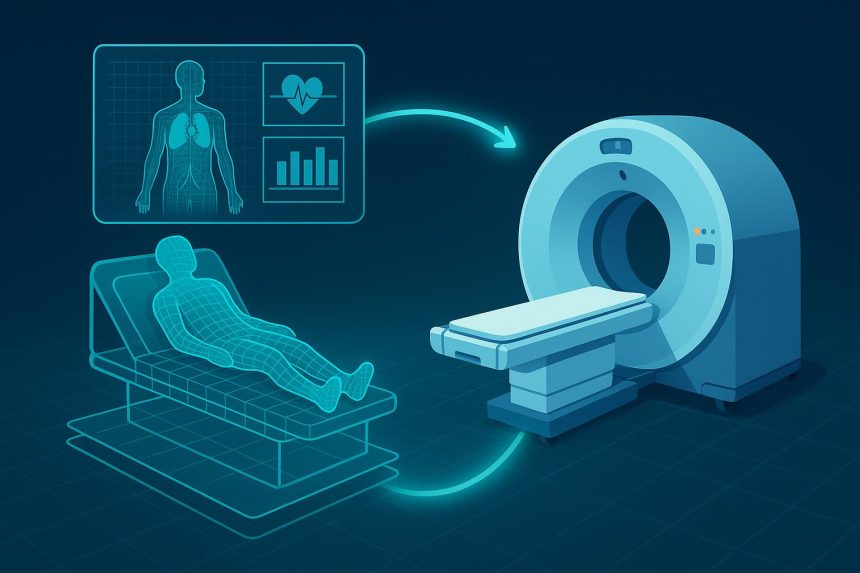
Think of a digital twin as a living blueprint. It’s a virtual model of something physical (a machine, a room, a human organ) that updates itself with real-time data. Unlike a static 3D rendering, a digital twin changes as the thing it represents changes.
The concept didn’t start in healthcare. NASA, aerospace firms, and car manufacturers used early versions for decades, testing jet engines and vehicle components without destroying expensive prototypes.
Healthcare caught on when three things converged: sensors got small and cheap enough to embed in medical devices, cloud computing made it possible to process massive patient data in real time, and AI reached a point where it could actually make sense of that data.
Today, a digital twin in a hospital might be a virtual replica of an MRI machine that predicts when a component will fail. It could be a simulation of an entire ICU that helps administrators plan staffing during flu season. Or it could be a personalized model of your heart, built from your CT scans and sensor data, that lets a cardiologist test a treatment before trying it on you.
The key distinction is that two-way data flow. A digital twin isn’t a snapshot. It’s a conversation between the physical world and its virtual counterpart, constantly syncing, constantly learning.
How Digital Twins Are Changing Medical Device Development
Here’s a problem most people don’t think about: getting a new medical device from concept to bedside takes an absurdly long time. Designing, testing, and gaining regulatory approval for something like a heart valve or an insulin pump can stretch across five to ten years. A big chunk of that timeline is consumed by physical testing, animal studies, and human clinical trials.
Digital twins compress that timeline. Instead of building dozens of physical prototypes, engineers can test hundreds of virtual iterations of a device in a fraction of the time. They can simulate how a pacemaker will interact with cardiac tissue across thousands of virtual patients, each with slightly different anatomies, before a single real patient is enrolled in a trial.
This matters because the software embedded in modern medical devices is often the most complex (and most failure-prone) component. Infusion pumps, ventilators, imaging systems, and surgical robots all depend on intricate code to function correctly. Specialists in medical device software development understand that even small errors in device logic can cascade into serious patient safety issues. Digital twins give development teams a safe sandbox to stress-test software under thousands of scenarios that would be impossible to replicate in a physical lab.
The regulatory world is paying attention, too. In November 2023, the FDA issued a final guidance document titled “Assessing the Credibility of Computational Modeling and Simulation in Medical Device Submissions,” signaling that virtual evidence is becoming an accepted part of the approval process. And in October 2024, the FDA and Dassault Systèmes published the ENRICHMENT Playbook, a 44-page peer-reviewed guide detailing how in silico (computer-simulated) clinical trials can be used to support device approvals.
That’s a meaningful shift. The traditional model, where a company spends years developing a product and then presents the results to regulators, is giving way to a more collaborative, simulation-informed process.
Three concrete ways digital twins are reshaping the device development cycle:
- Virtual prototyping at scale. Engineers can simulate how a device performs across diverse patient anatomies without building physical models for each variation. This cuts material costs and accelerates iteration speed.
- In silico clinical trials. Rather than relying solely on human trials to demonstrate safety, manufacturers can supplement with simulated trials that model thousands of virtual patients, reducing both cost and time to approval.
- Predictive failure analysis. Digital twins of deployed devices can flag software bugs, mechanical wear, or performance degradation before they cause real-world failures, which is especially valuable for implanted devices that can’t be easily inspected.
Real-World Examples That Already Exist
The most well-known project in this space is Dassault Systèmes’ Living Heart Project. Launched in 2014 in collaboration with the FDA, it brought together cardiovascular researchers, device developers, and cardiologists to build a realistic, physics-based 3D simulation of the human heart. The model incorporates electrical, structural, and fluid flow physics, meaning it doesn’t just look like a heart; it behaves like one.
The project’s origin story is personal. Steven Levine, the engineer who founded it, was motivated by his daughter’s rare congenital heart condition. She received her first pacemaker at age two, and doctors had limited confidence in their options because the condition was so unusual. Levine saw an opportunity to apply the same simulation tools used in aerospace to cardiac medicine.
A decade later, the Living Heart model is being used to test how cardiac devices interact with real patient anatomy before surgery. In 2025, Dassault announced a beta test for a next-generation version powered by AI, allowing the model to be rapidly customized for individual patients or specific patient populations. Fast Company recognized the Living Heart Project and the ENRICHMENT Playbook among its “World Changing Ideas” for 2025.
Other examples are equally striking:
- Siemens Healthineers built digital heart models using a database of over 250 million annotated images, reports, and operational data. The company also partnered with the Medical University of South Carolina to simulate workflow changes and test how medical equipment modifications affect hospital efficiency.
- Philips developed its HeartNavigator tool, which consolidates CT images into a cohesive 3D representation, giving surgeons real-time insight into device positioning during cardiac procedures. Philips has also explored hospital-level digital twins to simulate and optimize ICU operations during periods of high patient volume.
- GE Healthcare deployed its Care Command center technology during the COVID-19 pandemic, using digital twin principles to track bed and ventilator capacity across all hospitals in Oregon. This statewide view helped officials allocate critical resources instead of each hospital making decisions in isolation.
- FEops, a European company, combined digital heart twins with AI-enabled anatomical analysis for transcatheter aortic valve implantation (TAVI) procedures. Its HEARTguide platform is FDA-cleared in the U.S. and available in the EU, UK, Canada, and Australia.
- inHEART received FDA clearance in March 2024 for an AI-powered software module that automates CT image segmentation to generate 3D cardiac models. Early data showed up to a 60% reduction in ventricular tachycardia procedure times and a 38% decrease in recurrence rates compared to conventional methods.
These aren’t pilot programs sitting in a lab somewhere. They’re being used in real hospitals, on real patients, right now.
Why Hospitals Care (It’s Not Just About Cool Technology)
Hospital administrators don’t adopt new technology because it sounds impressive in a press release. They adopt it because it solves problems. Digital twins address several that keep health system leaders up at night.
Cost reduction is the obvious one. Physical prototyping of medical devices is expensive. Animal testing is expensive. Clinical trials are extremely expensive. Every step that can be partially replaced or supplemented by simulation represents potential savings. When Dassault Systèmes’ Playbook demonstrated a credible pathway to reducing the number of human patients required in device trials while maintaining safety standards, the financial implications were significant.
Predictive maintenance is another. A hospital MRI machine costs $1 million to $3 million. When it breaks down unexpectedly, it cancels patient appointments, delays diagnoses, and disrupts schedules across departments. A digital twin of that MRI, fed with real-time sensor data, can predict component failure days or weeks in advance, allowing repairs during scheduled downtime instead of mid-morning when 12 patients are waiting.
Operational planning rounds out the picture. During the COVID-19 pandemic, hospitals learned how quickly they could run out of beds, ventilators, and staff. Digital twins of entire hospital floors let administrators run “what if” scenarios: What happens if admissions spike 30% next week? What if three nurses call in sick on the same night shift? Siemens Healthineers’ ActExcell Operational Twin, for example, uses customer-specific data to model staffing, facility layout, and scheduling, predicting future scenarios and identifying ways to reduce patient wait times.
The Challenges Nobody Should Ignore
For all its promise, digital twin technology in healthcare comes with real obstacles that deserve honest discussion.
Data privacy sits at the top of the list. A digital twin of a patient’s heart is built from that patient’s most sensitive medical data: imaging, genetic information, sensor readings, electronic health records. Keeping that data secure while making it useful is a genuinely hard problem. Healthcare data breaches already cost an average of $10.93 million per incident according to IBM’s 2023 Cost of a Data Breach Report, the highest of any industry.
Interoperability remains a headache. Different hospitals use different electronic health record systems, imaging platforms, and device manufacturers. Getting all of those systems to share data smoothly with a digital twin platform requires standardization that the industry hasn’t fully achieved.
Accuracy and validation are ongoing concerns. A digital twin is only as good as the data feeding it and the physics models underpinning it. If the model doesn’t accurately capture how a specific patient’s tissue responds to a device, the simulation’s predictions could be misleading. Validating these models requires rigorous comparison with real-world outcomes, and the standards for that validation are still being established.
Cost of implementation shouldn’t be understated. Building and maintaining digital twin infrastructure requires significant upfront investment in computing power, data integration, and specialized talent. Smaller hospitals may find the technology out of reach without substantial cost reductions.
None of these challenges are insurmountable. But anyone telling you that digital twins are a simple plug-and-play solution for healthcare isn’t giving you the full picture.
What Comes Next
The trajectory is clear even if the timeline isn’t. Here’s what to watch:
- Expansion beyond the heart. Most current clinical digital twins focus on cardiology because the heart is well-studied and generates clean, measurable data. But research teams are already extending the approach to lungs (for ventilation optimization), tumors (for oncology treatment planning), and musculoskeletal systems (for orthopedic device testing).
- AI-powered personalization. The next generation of digital twins won’t just model a generic organ; they’ll model your organ, calibrated with your specific imaging, your genetic data, and your real-time sensor feeds. Dassault’s 2025 beta test is a concrete step in this direction.
- Regulatory momentum. The FDA’s increasing willingness to accept computational evidence alongside traditional clinical data is likely to accelerate. More guidance documents and more approved devices using in silico evidence are expected in the next few years.
- Whole-hospital twins. Instead of modeling individual devices or organs, some health systems are building digital twins of entire facilities, simulating everything from patient flow and staffing to energy consumption and supply chain logistics.
The healthcare digital twins market, growing at roughly 26% annually, reflects genuine confidence that this technology will become standard in how medicine is practiced.
The Bottom Line
Digital twins aren’t replacing doctors, nurses, or the messy reality of patient care. They’re giving healthcare professionals a tool previously reserved for aerospace engineers and car manufacturers: the ability to test, fail, learn, and optimize in a virtual environment before anything touches a real human being.
For patients, that means safer devices, faster access to new treatments, and hospitals that run more efficiently. For the industry, it means a fundamental shift in how medical devices are designed, tested, and maintained.
The virtual heart beating on that surgeon’s screen in Boston isn’t a gimmick. It’s a preview of how medicine works from here on out.

Lynn Martelli is an editor at Readability. She received her MFA in Creative Writing from Antioch University and has worked as an editor for over 10 years. Lynn has edited a wide variety of books, including fiction, non-fiction, memoirs, and more. In her free time, Lynn enjoys reading, writing, and spending time with her family and friends.