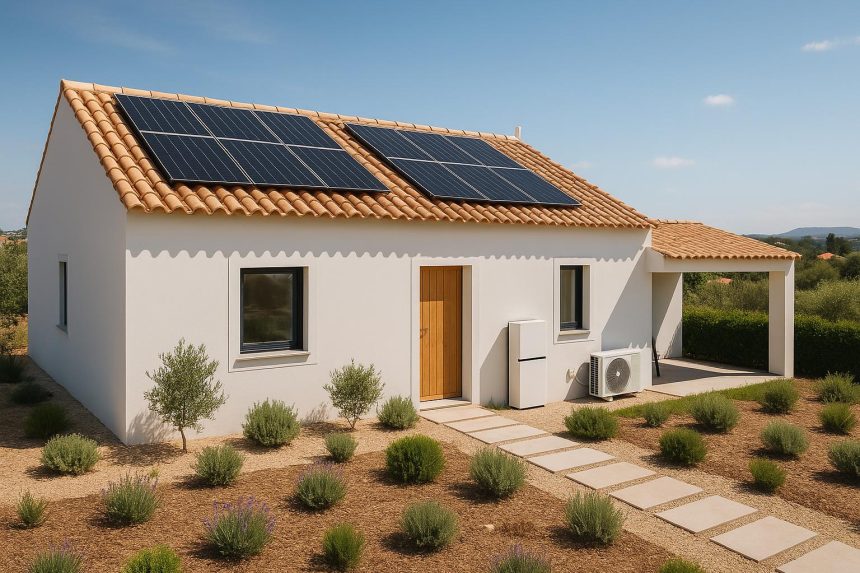
Portugal’s housing market is undergoing a quiet but significant transformation as energy independence becomes a defining feature of modern homes. Rising energy costs, growing environmental awareness, and supportive government policies are pushing both homeowners and developers toward properties that can generate and manage their own energy.
This shift is not a short-term trend driven by temporary market conditions. Instead, it reflects a structural change in how homes are designed, valued, and used over the long term. Increasingly, energy performance is becoming just as important as location, size, or design when evaluating a property.
Energy Independence as a New Housing Standard
One of the most notable developments in Portugal’s residential market is the move toward self-sufficient living. Homes are no longer seen as passive consumers of energy. Instead, they are evolving into active systems capable of producing, storing, and optimising their own power.
Modern properties are increasingly equipped with solar photovoltaic systems, battery storage, and smart energy management technologies. These features allow homeowners to reduce reliance on the national grid and gain greater control over their energy consumption.
This evolution is particularly relevant in a period of fluctuating energy prices. By generating their own electricity, homeowners can protect themselves from market volatility while improving long-term cost efficiency.
According to the European Environment Agency, renewable energy adoption across Europe continues to accelerate, with southern countries benefiting from higher solar potential. Portugal, with its favourable climate and policy support, has seen steady growth in distributed energy systems at the residential level.
Solar Adoption and Residential Energy Systems
Solar energy sits at the centre of Portugal’s smart home movement. The country’s high levels of sun exposure, particularly in southern regions, make residential solar installations both practical and financially attractive.
Data from the Direção-Geral de Energia e Geologia shows a consistent increase in small-scale solar systems across the country. More households are investing in rooftop panels and hybrid systems that combine generation with storage capabilities.
Battery storage is becoming a key component of these systems. It allows homeowners to store excess energy produced during the day and use it during the evening or periods of low sunlight. This significantly increases overall efficiency and reduces dependence on external energy sources.
In addition, technological advancements have made solar systems more accessible. Costs have gradually decreased, while performance and durability have improved. As a result, energy self-sufficiency is becoming a realistic option for a wider range of homeowners, not just early adopters.
Smart Grids and Energy Management
Beyond energy generation, modern homes in Portugal are increasingly focused on intelligent energy management. Smart systems allow homeowners to monitor consumption in real time, adjust usage patterns, and optimise efficiency throughout the day.
These systems can also respond to external factors such as grid demand or variable electricity pricing. For example, appliances can be programmed to operate during off-peak hours, reducing costs without affecting daily routines.
This integration between residential properties and the wider energy network represents an important step toward a more flexible and resilient system. Homes are no longer isolated units. They are becoming part of a connected infrastructure that supports both individual efficiency and broader sustainability goals.
For homeowners, this translates into lower energy bills, improved transparency, and greater control over how energy is used within the property.
Impact on Property Values and Buyer Preferences
Energy-efficient and self-sufficient homes are becoming increasingly attractive within Portugal’s property market. Buyers are placing greater emphasis on features such as solar panels, heat pumps, insulation quality, and energy certification ratings.
These elements are no longer viewed as optional upgrades. Instead, they are becoming essential components of long-term property value. Homes that offer lower operating costs and greater independence are more appealing, particularly to international buyers and environmentally conscious investors.
In this context, platforms such as Compass Property Sales are increasingly highlighting properties that meet modern energy efficiency standards, reflecting a clear shift in buyer expectations toward sustainability and operational performance.
As a result, properties with strong energy performance are often better positioned in the market. They tend to attract more interest and may achieve stronger resale values compared to less efficient alternatives.
Regional Advantages and Climate Factors
Portugal’s climate plays a central role in enabling the transition toward energy-smart housing. The country benefits from long hours of sunlight throughout the year, making renewable energy systems more effective than in many northern European markets.
Regions such as the Algarve are particularly well suited to this model. Strong solar potential, combined with high demand for modern housing, creates favourable conditions for the adoption of energy-efficient technologies.
In these areas, properties that incorporate renewable energy systems are increasingly aligned with buyer expectations. The combination of climate advantages and market demand reinforces Portugal’s position as a leading environment for sustainable residential development.
Regulation and Policy Support
Government policies and European Union initiatives continue to support the transition toward renewable energy and efficient housing. Incentives for solar installation, improved building regulations, and stricter energy certification requirements are all contributing to market growth.
These measures help reduce the financial barriers associated with adopting new technologies. They also encourage developers to incorporate energy-efficient features into new construction projects from the outset.
Over time, regulatory frameworks are expected to place even greater emphasis on energy performance. This will further integrate sustainability into the core structure of the housing market, rather than treating it as an optional enhancement.
Long-Term Investment Perspective
From an investment perspective, self-sufficient homes offer a combination of cost efficiency and future resilience. Lower energy bills, reduced exposure to price fluctuations, and improved marketability all contribute to their long-term appeal.
As energy efficiency becomes a baseline expectation, properties that lack these features may face increasing pressure in terms of both demand and value. Buyers are becoming more informed and selective, prioritising homes that offer long-term savings and environmental benefits.
This dynamic is gradually reshaping the property market. Sustainability is no longer a secondary consideration. It is becoming a central factor in how investment decisions are made.
Outlook for Portugal’s Smart Housing Market
Looking ahead, the adoption of smart energy systems in Portugal is expected to continue growing steadily. Technological improvements, declining costs of solar and storage solutions, and increasing environmental awareness will all support this trajectory.
The integration of homes into smarter, more responsive energy networks is likely to become more widespread. This will further enhance efficiency, reduce waste, and improve resilience across the housing sector.
Portugal’s combination of climate, infrastructure, and policy support positions it as one of Europe’s most promising markets for the future of self-sufficient living.
Conclusion
Smart energy homes are redefining what it means to own property in Portugal. The focus is shifting from simple ownership toward long-term sustainability, efficiency, and independence.
Supported by data from the European Environment Agency and the Direção-Geral de Energia e Geologia, the direction of the market is clear. Energy-smart homes are becoming an integral part of the country’s real estate landscape.
As buyer expectations continue to evolve, the market is adapting accordingly. Self-sufficient living is no longer a niche concept. It is emerging as a new standard, shaping the next phase of Portugal’s housing market and influencing how properties are designed, built, and valued for years to come.

Lynn Martelli is an editor at Readability. She received her MFA in Creative Writing from Antioch University and has worked as an editor for over 10 years. Lynn has edited a wide variety of books, including fiction, non-fiction, memoirs, and more. In her free time, Lynn enjoys reading, writing, and spending time with her family and friends.