Key Takeaways
- San Francisco trips are easier when the travel choice matches the distance, terrain, weather, and time of day.
- Walking and public transit can work especially well for short trips through dense neighborhoods.
- Planning pickup points, crossings, hills, and backup routes reduces stress.
- Safer streets depend on thoughtful choices from drivers, riders, cyclists, pedestrians, and planners.
- New mobility tools can add convenience, but they work best alongside reliable transit and safe sidewalks.
Getting around San Francisco is easier when you treat each trip as a mix of choices rather than a one-mode decision. Walking, buses, rail, cycling, taxis, shared rides, and newer services can all have a place, depending on the hills, weather, schedule, and your comfort level. For travelers considering newer options, a Zoox autonomous taxi in San Francisco may be one part of a broader transportation plan. It is still wise to know where you will be picked up and dropped off, and how you will safely complete the last few blocks.
Why San Francisco Travel Takes A Flexible Plan
San Francisco rewards flexible planning. A route that looks short on a map may include a steep climb, a narrow sidewalk, a long stairway, or a crowded intersection. Fog, wind, rain, major events, and rush-hour traffic can also change how a trip feels. Instead of expecting one option to work everywhere, combine modes. For example, you might walk a few level blocks to a transit stop, ride across town, then finish with a short walk rather than attempting one long uphill route.
How To Choose The Right Travel Mode
Before leaving, use a quick decision process that accounts for the practical details of the trip.
- Check the distance. A short neighborhood trip may be quickest on foot, while a longer cross-city trip may call for transit or a ride.
- Check the terrain. Review elevation, stairs, and street layout, especially if you are carrying bags or traveling with children.
- Check the weather. Wind and rain can make cycling, walking, and waiting outdoors less comfortable.
- Check the timing. Allow extra time near events, during commute periods, and late at night.
- Keep a backup. Save a second route in case service changes, a station elevator is unavailable, or a pickup zone is busy.
When Walking Makes The Most Sense
Walking is often the best choice in compact areas where shops, parks, restaurants, and attractions sit close together. It also gives you more freedom to change plans when a street is congested or a stop is crowded. Wear supportive shoes, carry water, and build extra time into routes that include hills. Use marked crossings, wait for the pedestrian crossing signal, and stay alert near driveways and turning vehicles. At night, favor well-lit streets and resist the urge to rush through a busy intersection.
How To Use Public Transit With Less Stress
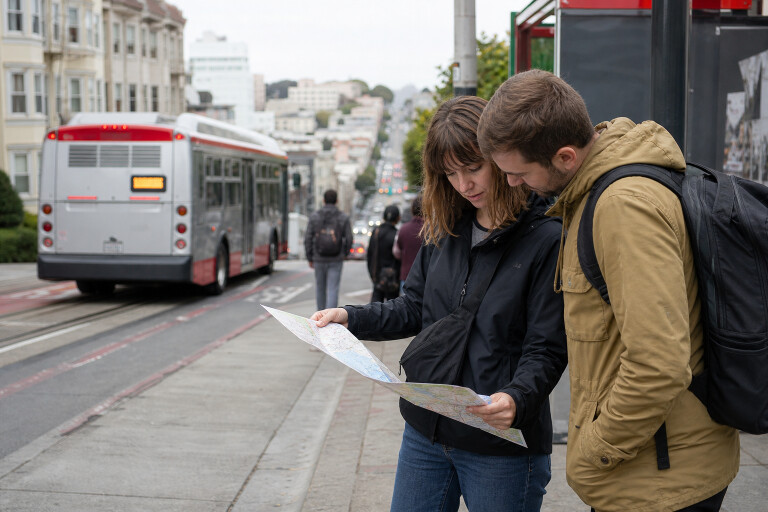
First-time riders can make transit feel simpler by planning before they reach the stop. The city’s transportation guide can help compare Muni, walking, biking, driving, parking, and accessibility options in one place.
- Confirm the route, direction of travel, and the line’s destination before boarding.
- Keep fare payment ready and give yourself time to locate the correct platform or stop.
- Expect transfers to take longer when vehicles are crowded or when weather conditions are poor.
- Check for temporary detours, changed stops, and service notices before setting out.
- Stand clear of doors, allow passengers to exit first, and keep bags close without blocking aisles.
Simple Habits That Support Safer Streets
Every day decisions add up on busy streets. San Francisco’s road safety framework emphasizes the shared goal of reducing severe traffic injuries and deaths through safer street design, education, enforcement, and policy.
- Look both ways before crossing, including when the signal says it is your turn.
- Put phones away before stepping off the curb or entering a bike lane.
- Watch for vehicles turning across a crosswalk and make eye contact with drivers when practical.
- Use bike lanes and shared paths as intended, while remaining aware of people entering or leaving vehicles.
- Leave clear space for buses, emergency vehicles, wheelchairs, strollers, and other mobility devices.
Planning For Mobility, Luggage, And Accessibility Needs
A comfortable route is not always the shortest route. Check for curb cuts, ramps, elevators, seating, platform access, and sidewalk conditions before you begin. Travelers with luggage may prefer fewer transfers and flatter approaches, even if the total trip takes a little longer. Groups should choose a simple meeting point before separating, such as a station entrance or a clearly named corner. Because conditions can change, confirm current accessibility details on the day of travel.
Where New Mobility Tools Fit In
Trip-planning apps, shared rides, electric vehicles, bike share, and automated transportation can help fill gaps between destinations and transit stops. Their value depends on clear pickup locations, dependable availability, understandable pricing, and safe curbside behavior. Before using any service, review the payment process, seating and luggage expectations, customer support options, and emergency instructions. Technology should make a trip easier without encouraging risky crossings, blocked sidewalks, or rushed decisions around moving traffic.
Sample Travel Plans For Common Trips
- A short neighborhood visit: Walk between nearby places, then use transit only for the steepest or longest section.
- A cross-city meeting: Take rail or bus service for the main distance, then walk the final few blocks.
- An evening outing: Check return service hours, select a visible pickup point, and save a backup route.
- A trip with luggage: Choose fewer transfers, accessible stations, and routes with room to wait safely.
- A group day out: Agree on a meeting point and a simple plan if phone batteries die or signals fail.
Common Questions About Getting Around San Francisco
Is Walking Practical In San Francisco?
Yes, particularly for short trips in dense neighborhoods. Hills, weather, limited mobility, and luggage may make a combined walking-and-transit plan more comfortable.
What Is The Best Way To Avoid Travel Delays?
Check service notices, leave a time buffer, and keep a second option ready. A flexible route is usually more valuable than a tightly timed one.
How Can Travelers Stay Safer Near Busy Streets?
Use marked crossings, follow signals, remain visible after dark, and avoid distractions when crossing or waiting near traffic.
Should Visitors Rent A Car?
It depends on the itinerary. Parking, traffic, steep streets, and dense neighborhoods can make walking, transit, or rides more practical for many city-focused trips.
Conclusion
San Francisco travel becomes simpler when each trip begins with a small plan. Consider distance, hills, weather, timing, and personal needs, then choose a flexible mix of walking, transit, cycling, and shared mobility. Checking routes and service schedules ahead of time can also help avoid unnecessary delays. This approach can reduce stress, make daily travel more convenient, and help visitors and residents navigate the city’s busy streets with greater confidence. It can also encourage more sustainable transportation choices while helping make San Francisco’s streets safer and more welcoming for everyone.

Lynn Martelli is an editor at Readability. She received her MFA in Creative Writing from Antioch University and has worked as an editor for over 10 years. Lynn has edited a wide variety of books, including fiction, non-fiction, memoirs, and more. In her free time, Lynn enjoys reading, writing, and spending time with her family and friends.