


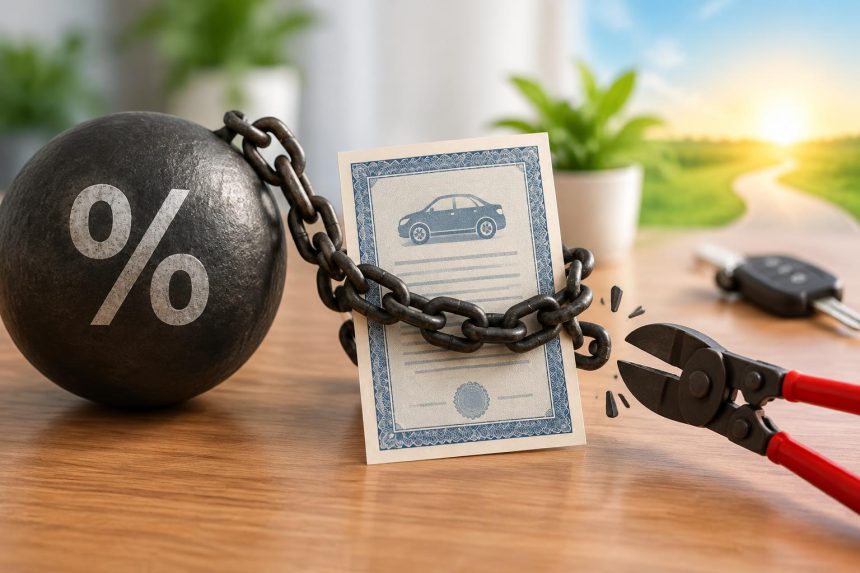
A high-interest title loan can turn a short-term cash shortage into a much bigger financial problem. Your car may have helped you get money when you needed it, but now a large share of each payment may go toward interest and fees instead of reducing what you owe. The very vehicle you rely on for work, family errands and daily life is at risk. This guide explains how to assess your situation, compare your options and work toward a way out without losing your car or draining your savings to pay it off all at once.
How to Get Out of Your High-Interest Title Loan
Check Your Loan Balance and Find Your Way Out
Before you contact another lender or put extra money toward your loan, get a clear picture of what you owe. Your original loan amount may be very different from the amount needed to close the account today, in case the fees have accumulated or you’ve renewed the loan several times.
Read your loan agreement and contact your current lender to request:
- The current payoff amount
- The interest rate and APR
- The payment schedule
- Early repayment terms
- Default and repossession terms
Next, look at your monthly budget. Set aside money for housing, food, utilities, insurance and other essential bills before deciding how much you can put toward the loan. If the regular payment leaves you short every month, you need a change in the loan terms or a cheaper way to repay it, not another round of borrowing to cover the gap.
Explore a Loan Buyout
A title loan buyout can help you get out of an expensive loan by replacing it with a new loan with more reasonable terms. A new lender pays off your title loan and you get a lower interest rate, a payment plan you can handle and enough time to pay off what you owe.
A lender-to-lender sale of an existing loan account is different than refinancing.
Pursue a buyout that works in your favor.
- Ask your current lender for a payoff quotation.
- Find lenders that refinance existing title loans. Compare offers from reputable title loan companies, credit unions, banks and other lenders that may be willing to pay off your current loan. Approval depends on income, credit, state law and the vehicle’s value.
- Compare the full cost of each offer.
- Confirm how the old loan will be closed. Ask the new lender whether it pays the original lender directly, how it handles the vehicle’s lien and title and when you will receive written confirmation that the old account has been paid off.
Choose a buyout that saves you money
Compare the new loan against the cost of keeping your existing one until it’s paid off.
For example, imagine your current loan has a $1,500 payoff balance. A new lender offers to pay it off at a lower APR, but charges an origination fee and extends repayment by several months. The lower rate may still be worthwhile, but you’ll need to include that fee and the extra interest in your calculation.
Ask Your Lender for a More Affordable Deal
If your payment is too high, reach out to your lender before you get further behind. Tell them what you can honestly afford each month and ask about any hardship options. Some lenders might offer a new payment plan, a temporary reduction, a fee waiver or an extension.
Ask your lender a few important questions:
- Whether interest and fees can be reduced or stopped.
- The new payoff date and total amount to be repaid.
- How missed payments or a settlement could affect the credit record.
- Whether repossession will be put on hold while the revised payment terms are followed.
Conclusion
To get out of a high-interest title loan, start by finding out exactly what you owe and pick a plan that protects your money and your car. A title loan buyout might help or you might have better luck working out a deal with your lender. What matters most is comparing the total cost of each choice, instead of just looking at a lower monthly payment that could keep you in debt longer.

Lynn Martelli is an editor at Readability. She received her MFA in Creative Writing from Antioch University and has worked as an editor for over 10 years. Lynn has edited a wide variety of books, including fiction, non-fiction, memoirs, and more. In her free time, Lynn enjoys reading, writing, and spending time with her family and friends.