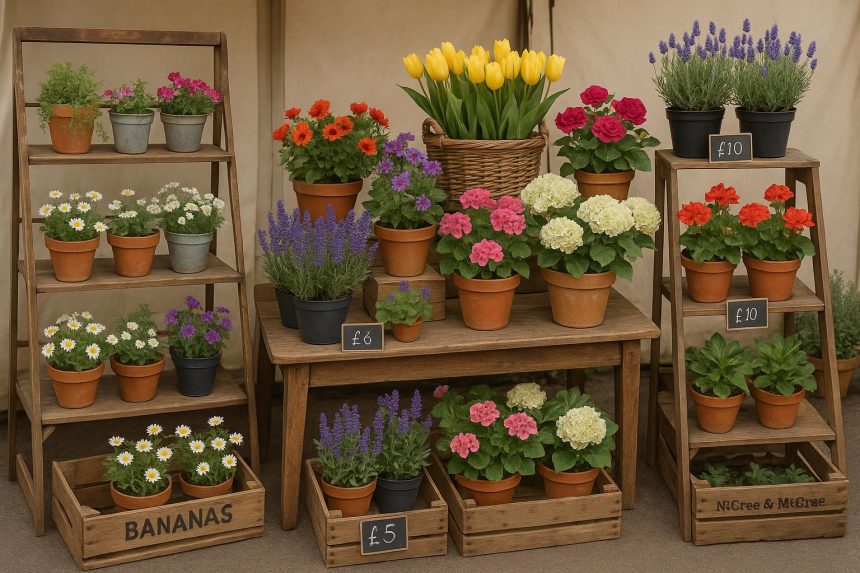
When you’re selling plants and flowers, you’re not just offering a product — you’re offering colour, texture, scent and atmosphere. Your stall should feel like a miniature garden oasis, drawing customers in before they’ve even consciously decided to stop.
A thoughtfully designed display does more than hold stock. It tells a story. It communicates quality. And most importantly, it helps customers imagine your plants or flowers in their own homes.
One of the simplest ways to elevate your setup is by investing in well-structured freestanding display furniture. Layered shelving, tiered tables and vertical frames allow you to build height, create flow and showcase your greenery without clutter. From there, it’s all about how you use the space.
Let’s explore some display ideas that can help your plant or flower stall stand out at markets, festivals and pop-up events across Australia.
Create Height and Visual Layers
Plants naturally vary in size — so your display should too.Avoid lining everything up at the same level. Instead:
- Place taller plants or statement foliage at the back or centre.
- Use mid-height tables for medium pots and arrangements.
- Position smaller succulents, herbs or posies at the front where customers can easily pick them up.
Layering creates visual depth and makes your stall look abundant rather than crowded. It also ensures customers can see everything at a glance without having to dig through greenery.
Vertical displays are particularly effective for trailing plants like devil’s ivy or string of pearls. Allowing them to cascade from shelves adds movement and softness, making your stall feel lush and inviting.
Use Colour to Guide the Eye
Flowers give you a natural advantage — colour sells.Instead of mixing everything randomly, consider grouping by:
- Colour families (whites and greens together, brights together, pastels together)
- Seasonal tones (spring brights, autumnal rusts and burgundies)
- Arrangement type (natives, cottage-style, modern minimal)
Blocks of colour are visually striking and photograph beautifully — which matters in the age of social media. When customers snap and share your stall, you gain organic exposure.If you primarily sell potted plants, use pots and planters strategically. Neutral tones (terracotta, white, charcoal) help foliage pop. Alternatively, a cohesive colour scheme across your pots can give your stall a polished, curated look.
Keep It Natural and Textured
Plants and flowers feel organic — so your display materials should complement that.Timber shelving, woven baskets, linen table covers and rustic crates all enhance the natural aesthetic. Avoid overly glossy or plastic-heavy setups unless it suits your brand identity.
Adding subtle props can also create atmosphere:
- Watering cans
- Vintage garden tools
- Small timber ladders
- Woven market baskets
The key is restraint. Props should enhance the display, not distract from the plants themselves.
Make Pricing Clear (But Beautiful)
Nothing slows a sale faster than unclear pricing.Instead of handwritten scraps of paper, consider small blackboard signs, simple printed cards in plant stakes, and clean, uniform price tags. For bouquet stalls, display pricing by size — “Small $15 | Medium $25 | Large $40” — so customers can quickly make decisions without asking.Clarity builds trust. A professional, consistent signage style reinforces the idea that you take pride in your products.
Create a Feature or Hero Piece
Every stall benefits from a focal point.This could be:
- A large statement plant
- A dramatic floral arrangement
- A hanging installation overhead
- A styled “mini garden” vignette
Your hero piece acts as a magnet – it draws people in from a distance, then gives them a reason to browse the smaller items.If you’re selling native Australian flowers, for example, a large gum-and-banksia arrangement at the centre of your stall instantly communicates your niche and attracts the right customers.
Consider Flow and Accessibility
Markets can get busy; customers need space to browse comfortably.Avoid blocking the front of your stall with bulky tables. Keep entry points clear and ensure there’s enough room for prams, bags and multiple people to move around.
If possible, allow customers to step slightly into the stall rather than standing on the outside looking in. Even a small shift in layout can make your space feel more welcoming.Place popular or impulse-buy items (like small succulents or single stems) near the front (larger, higher-priced items can sit further back once customers are already engaged).
Highlight Seasonal Appeal
Seasonality is your greatest marketing tool.Rotate your display to reflect spring blooms, summer colour, autumn foliage and winter indoor greenery. Use simple signage such as “Perfect for Mother’s Day” or “Low-maintenance indoor plants” to connect your stock to real-life needs. When customers understand how a plant fits into their lifestyle, they’re more likely to purchase.
Keep It Fresh and Well Maintained
This may seem obvious, but it’s crucial: your plants must look healthy and cared for.
- Remove wilted blooms
- Wipe dusty leaves
- Keep pots clean
- Water appropriately (without creating puddles)
A tidy, vibrant stall signals quality… a neglected one does the opposite.If the day is hot, mist flowers occasionally to keep them looking lively. Shade structures can also help preserve freshness throughout long market hours.
Encourage Interaction
People love touching plants; it’s part of the buying experience.Position items within reach and avoid overly fragile arrangements that make customers nervous to engage. When customers can pick up a pot, feel the leaves and visualise it at home, the emotional connection strengthens.
You can also share short care tips verbally or via small info cards. A simple note like “Thrives in indirect light” or “Water weekly” reduces hesitation and builds confidence in the purchase.
Build a Brand Presence
Finally, your display should reflect your brand.Ask yourself:
- Are you rustic and earthy?
- Modern and minimal?
- Colourful and bold?
- Native-focused and distinctly Australian?
Consistency across your signage, packaging and display materials reinforces your identity and helps customers remember you.Even small details — branded wrapping paper, custom stickers, uniform aprons — add professionalism and cohesion.
An effective plant or flower stall display isn’t about overcomplicating things – it’s about structure, flow and atmosphere.
By layering heights, grouping colours, using natural textures and investing in sturdy display solutions, you create a space that feels inviting, abundant and easy to browse. When customers feel good standing in your stall, they’re far more likely to walk away with something in hand.
At the end of the day, plants and flowers already have beauty on their side. Your job is simply to frame them well.

Lynn Martelli is an editor at Readability. She received her MFA in Creative Writing from Antioch University and has worked as an editor for over 10 years. Lynn has edited a wide variety of books, including fiction, non-fiction, memoirs, and more. In her free time, Lynn enjoys reading, writing, and spending time with her family and friends.