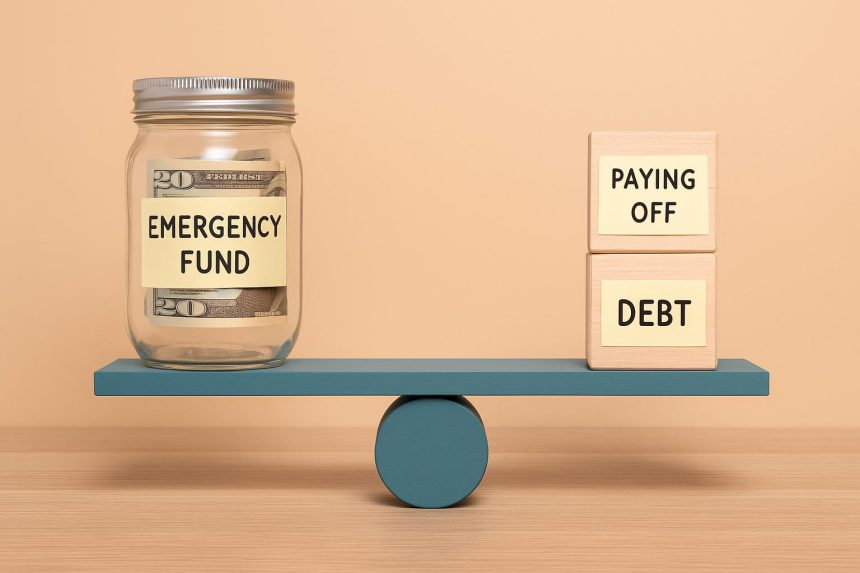
It’s one of the most common personal finance dilemmas: should you focus on building an emergency fund, or throw every spare dollar at paying off debt?
On paper, the answer seems obvious. If you’re paying interest (especially high interest!), clearing debt quickly can save you hundreds or even thousands over time. But real life isn’t lived on paper. Cars break down. Appliances fail. Work hours get cut. And when that happens without a financial buffer, many Australians end up reaching for credit (this is where emergency options like a bad credit history credit card can be perceived as a potential pathway to get through).
So, what should come first: your emergency fund or your debt?
The short answer? It’s rarely all or nothing. The smarter approach is usually strategic balance.
Why an Emergency Fund Matters (Even if You’re in Debt)
An emergency fund is your financial shock absorber. It’s money set aside specifically for unexpected, necessary expenses — not holidays, not upgrades, not “just in case I feel like it” …think car repairs, urgent medical or dental bills, essential home repairs or sudden loss of income.
Without an emergency fund, these situations often lead to more borrowing – this can mean adding to existing credit card balances or taking out short-term loans, which can quickly spiral into higher interest costs and added stress. In that sense, an emergency fund isn’t just savings — it’s protection. It stops temporary problems from becoming long-term debt.
Why Paying Off Debt is So Important
On the other side of the equation is interest. If you’re carrying high-interest debt — particularly credit card balances — that interest compounds against you. For example, a $5000 balance on a card with a 20% interest rate can cost you roughly $1000 a year in interest alone if left unpaid. That’s money that could otherwise go towards savings, investments, or simply improving your lifestyle.
Beyond the numbers, there’s also the psychological benefit. Reducing debt:
- Frees up future cash flow
- Improves your credit profile
- Reduces financial anxiety
- Builds confidence and momentum
So it’s understandable why many people feel pressure to focus exclusively on debt reduction.
The Risk of Ignoring One for the Other
Here’s where things get tricky.
If you focus only on paying off debt and have no emergency fund, one unexpected expense can undo months of progress. You may end up adding fresh debt right after finally reducing it. On the other hand, if you prioritise building a large emergency fund while making only minimum repayments, you could be paying substantial interest unnecessarily.
Both extremes have drawbacks – that’s why many financial advisers recommend a phased approach.
A Practical, Balanced Strategy
Rather than choosing one goal over the other, consider breaking the process into stages.
Stage 1: Build a Starter Emergency Fund
Before aggressively attacking debt, aim for a modest emergency buffer — often $1000 to $2000 as a starting point. This amount won’t cover every possible scenario, but it can handle many common surprises. It reduces the likelihood of reaching for more credit and gives you breathing room. Keep this money in a separate, easily accessible savings account (…but not so accessible that you dip into it for everyday spending!).
Stage 2: Focus on High-Interest Debt
Once your starter fund is in place, shift your attention to high-interest debts first. Two popular strategies include:
- Debt avalanche: Pay off the highest interest rate first (mathematically optimal).
- Debt snowball: Pay off the smallest balance first (psychologically motivating).
Either method works — the best one is whichever one you’ll stick to consistently. During this stage, continue making minimum repayments on all debts while directing extra funds to your chosen target.
Stage 3: Expand Your Emergency Fund
After clearing high-interest debt, redirect those freed-up repayments into building a fully funded emergency reserve. For most Australians, this means three to six months’ worth of essential living expenses. If you’re self-employed or have irregular income, you may want closer to six months. At this point, you’re no longer choosing between stability and progress — you’re building both.
Some Factors That May Change the Order
While the staged approach works for many people, your situation matters. Consider:
- Job stability: If your income is uncertain, prioritise a larger emergency fund sooner.
- Interest rates: Extremely high-interest debt may justify faster repayment.
- Dependants: If others rely on your income, financial buffers become even more important.
- Access to credit: If your borrowing options are limited or expensive, having savings is critical.
There’s no universal rule — only informed decisions based on risk and reality.
The Emotional Side of the Equation
Money decisions aren’t purely mathematical. Carrying debt can feel heavy. Having savings can feel empowering. Sometimes the right move is the one that reduces stress enough to keep you moving forward. If seeing your savings grow motivates you, build your starter fund first. If eliminating a debt gives you energy and confidence, tackle that target. The key is progress, not perfection.
The Bottom Line? Stability First, Then Acceleration
In most cases, the most effective order looks like this:
- Build a small emergency buffer.
- Aggressively reduce high-interest debt.
- Fully fund your emergency savings.
This approach protects you from setbacks while steadily improving your financial position.
Financial security isn’t built through extreme swings between saving and paying down debt; it’s built through structure, discipline, and smart sequencing.
If you’re unsure where to start, take one simple step this week — open a dedicated savings account, review your interest rates, or set up an automatic transfer. Momentum begins with small, consistent actions.
Because the real goal isn’t just being debt-free or having savings. It’s having options — and the confidence that comes with them.

Lynn Martelli is an editor at Readability. She received her MFA in Creative Writing from Antioch University and has worked as an editor for over 10 years. Lynn has edited a wide variety of books, including fiction, non-fiction, memoirs, and more. In her free time, Lynn enjoys reading, writing, and spending time with her family and friends.