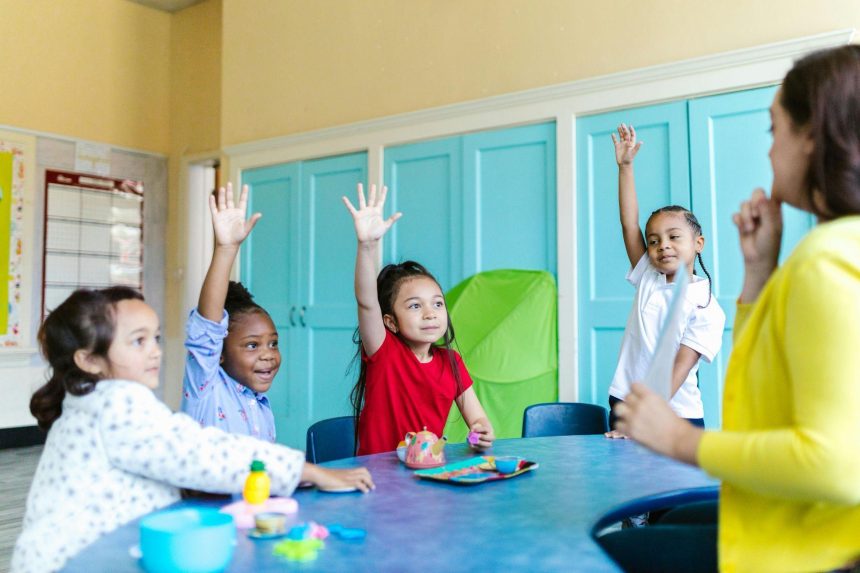
Choosing the right educational environment for a child is one of the most significant decisions a parent can make, especially when seeking a space that values individuality and creativity. Families in the local community are fortunate to have access to a premier early learning centre Taigum that provides a nurturing and sophisticated environment where children are encouraged to lead their own discovery and learning. At Kids ELC Taigum, the educational approach transcends traditional childcare by implementing a curriculum inspired by the world-renowned Reggio Emilia philosophy. This method views children as capable, resilient, and filled with potential, ensuring that every day is an opportunity for profound intellectual and emotional growth.
The Reggio Emilia approach originated in Italy following World War II, founded on the belief that children are citizens with rights and “one hundred languages” through which they express their thoughts and understandings. At Kids ELC Taigum, this philosophy is not just a label but a living practice. The environment is considered the “third teacher,” carefully curated to provoke curiosity, communication, and collaboration. From the moment a child enters the center, they are immersed in an atmosphere that respects their agency and invites them to explore the world through their own unique lens.
The Heart of Creativity: The Atelier
Central to the Reggio-inspired experience at Kids ELC is the “Atelier,” or art studio. Unlike a standard craft corner found in many childcare settings, the Atelier is a dedicated space designed to foster deep symbolic expression. It is a laboratory for the mind where children use a vast array of materials, often referred to as “loose parts,” to represent their ideas. These materials might include clay, charcoal, recycled textiles, wire, and natural elements like seed pods or smooth river stones.
The Atelierista, a specialized educator with a background in the arts, works alongside the children to support their projects. The focus is never on the final product, such as a perfectly painted flower, but rather on the process of inquiry. When a child works in the Atelier, they are learning how to solve problems, how to observe details in nature, and how to translate an abstract thought into a physical form. This process builds cognitive pathways and reinforces the idea that their voice and their “language” of expression are valuable.
Child-Led Inquiry and the Power of Projects
In a traditional classroom, the teacher often decides what the theme of the week will be. At Kids ELC Taigum, the curriculum is emergent. This means that educators closely observe the children at play to identify their interests. If a group of children becomes fascinated by the way shadows move across the playground, the educators will facilitate a project about light and darkness.
This child-led inquiry ensures that learning is always relevant and engaging. Because the children are genuinely interested in the subject, they develop a longer attention span and a deeper level of concentration. These projects can last for days, weeks, or even months, evolving as the children ask more complex questions. This approach teaches children how to learn, a skill that will serve them throughout their entire academic journey and adult life.
Specialized Studios: A Journey Through Milestones
Kids ELC Taigum is uniquely structured into specialized studios named after beautiful Italian locations, reflecting the heritage of the Reggio Emilia philosophy. Each studio is tailored to the developmental milestones of specific age groups, ensuring that the physical environment and the curriculum evolve as the child grows.
Mirabello: The Nest of Discovery
The journey often begins in the Mirabello studio, designed for the youngest members of the community. In this space, the focus is on sensory exploration and building secure attachments. The environment is calm and home-like, featuring soft textures and natural light. Educators in Mirabello understand that infants are active seekers of knowledge. Through “treasure baskets” filled with objects of different weights and temperatures, babies begin to categorize and understand the physical world. The curriculum here emphasizes the “language of touch and sound,” providing a safe harbor for the first steps of independence.
Montefiore: Expanding Horizons
As children transition into the Montefiore studio, their mobility and curiosity increase. This space is designed to support their burgeoning autonomy. Here, the Reggio influence is visible in the way materials are displayed at eye level, inviting children to choose their own activities. Social interaction becomes a key component of the day. Educators facilitate small group experiences that encourage toddlers to notice one another, share space, and begin the complex process of social navigation.
Ventimiglia: The Age of Why
In the Ventimiglia studio, language skills explode, and the “hundred languages” of the child begin to flourish. This is the age of constant questioning. The curriculum responds by providing more complex tools and resources. Children might begin to engage in basic scientific experiments or use digital cameras to document things they find interesting in the outdoor gardens. The focus is on fostering a sense of wonder and ensuring that every “why” is met with an opportunity to find the answer together.
Belvedere: Preparation for the Future
The Belvedere studio serves as the preschool environment, where the culmination of years of Reggio-inspired learning prepares children for the transition to formal schooling. In Belvedere, the projects become more sophisticated, often involving community outreach or complex engineering challenges with blocks and recycled materials.
While there is a strong focus on literacy and numeracy, these subjects are integrated into meaningful play. For example, a child might write a “menu” for a dramatic play restaurant or count the number of steps it takes to cross the bridge in the garden. This ensures that academic concepts are grasped through practical application rather than rote memorization. The goal of the Belvedere studio is to graduate children who are confident, articulate, and eager to take on the challenges of Prep and beyond.
The Role of the Educator as a Researcher
At Kids ELC Taigum, educators are not merely supervisors; they are researchers. They document the children’s learning journeys through photographs, transcriptions of conversations, and collections of work. This documentation is visible throughout the center, allowing parents to see the depth of thinking that occurs during the day.
By documenting the process, educators can reflect on the children’s progress and plan the next steps of the curriculum. It also gives the children a sense of pride, as they see their thoughts and creations displayed with the same respect as fine art in a gallery. This cycle of observation, documentation, and reflection is what makes the Reggio-inspired curriculum so dynamic and effective.
A Partnership with Parents
The Reggio Emilia philosophy views the family as an essential component of the educational team. Kids ELC Taigum fosters a strong sense of community, welcoming parents to share their own skills and perspectives. Whether it is a parent coming in to play a musical instrument or sharing a cultural tradition, these contributions enrich the learning environment for everyone.
Parents are kept informed through regular updates and the beautiful documentation displayed in the studios. This transparency builds a bridge between home and the center, ensuring that the child feels a sense of continuity and security in both environments.
Conclusion
Beyond the high-quality care and the beautiful facilities, Kids ELC Taigum offers a philosophy that honors childhood. By focusing on the Atelier, embracing child-led inquiry, and providing specialized studios that cater to developmental milestones, the center ensures that every child is seen, heard, and challenged. In this Reggio-inspired haven, play is not just an activity; it is the fundamental way that children build their understanding of the world. For parents seeking an education that nurtures the heart as much as the mind, Kids ELC Taigum provides a foundation of excellence that lasts a lifetime.

Lynn Martelli is an editor at Readability. She received her MFA in Creative Writing from Antioch University and has worked as an editor for over 10 years. Lynn has edited a wide variety of books, including fiction, non-fiction, memoirs, and more. In her free time, Lynn enjoys reading, writing, and spending time with her family and friends.