With decades of experience overseeing international shipments across nearly 100 countries, Baron Nadder Haghighi-Brookheim brings a practical, operations-focused perspective to the role that documentation plays in clearing customs. As the long-serving chief executive of Michael Technologies Group International, he has managed the movement of thousands of distinct products by air, sea, and land, working within the regulatory frameworks of diverse markets. His background in international business and banking, supported by doctoral studies completed in Geneva, has shaped a disciplined approach to compliance, valuation, and cross-border reporting. Beyond global logistics, his leadership extends to manufacturing and leasing activities, including specialized equipment for transportation and emergency response. This breadth of exposure connects directly to the documentation demands exporters face, where accuracy, consistency, and timing determine whether goods move efficiently or encounter delays at the border.
What Exporters Need to Document to Clear Customs
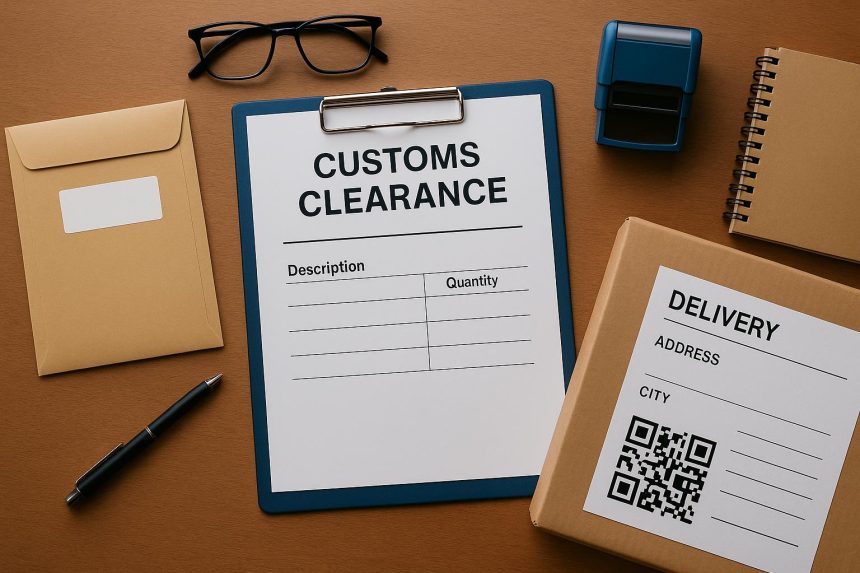
In global trade, documentation can determine whether an export moves forward or stops at the border. Customs authorities use paperwork to confirm the merchandise, its origin, its value, and what duties, taxes, or controls apply. Missing or inaccurate documents can trigger holds or inspections even when the cargo is ready to ship. Exporters treat documentation as a core operational function and build it into their daily workflows.
Most shipments rely on a set of foundational documents. A commercial invoice states the value, seller, buyer, and description of the goods; a packing list details quantities, weights, and packaging; and a bill of lading or air waybill records transport and custody. Customs officials compare these documents against each other and against the physical cargo. All additional requirements build on this document set.
Some destinations require a certificate of origin as a supplement to the commercial invoice. The document verifies the place of manufacture of the goods so customs officials can apply tariff rules, including reduced duty rates under trade agreements. If the shipment does not include the required proof of origin, customs may apply the standard duty rate rather than any available preferential rate.
Some shipments require additional compliance documentation tied to the product, destination, or transaction, beyond the invoice and transport paperwork. In US exports, this can include export compliance filings and statements for controlled items, such as Destination Control Statements that appear on documents like the commercial invoice or bill of lading. Certain markets also require pre-shipment inspection certificates that confirm quantities or verify that goods meet the destination country’s safety or performance standards.
The most common documentation failures are procedural rather than strategic. Examples include invoice values that do not match contract terms, packing lists that omit pallet counts, unsigned certificates, or incomplete or inaccurate fields in required submission formats. These issues arise from inconsistent data across the documents. Exporters mitigate them by reviewing document alignment before submission.
Documentation requirements also vary by destination, affecting presentation. Some customs authorities require translated invoices or specific data fields to appear in prescribed layouts, and partner government agencies may add commodity-specific rules on top of customs requirements. Exporters often maintain destination-specific templates to keep the same documents aligned with each jurisdiction’s format.
In many customs systems, authorities require advance electronic filings for clearance or pre-arrival screening, and brokers or other authorized parties transmit the data through government platforms. In the United States, shippers file entry documents electronically, and some ocean shipments require advance filings on set timelines. This sequencing makes document readiness as important as physical staging, ensuring clearance can begin on time.
Freight forwarders and customs brokers manage document submission and communication once exporters prepare the paperwork. They upload forms to customs systems, monitor review status, and respond to information requests, acting as the interface with customs authorities. Exporters remain responsible for accuracy even when brokers handle execution and monitoring.
Many exporters use digital platforms to manage documentation at scale. These systems generate invoices and packing lists directly from order data and apply validation rules across documents, reducing mismatches and speeding up corrections when shippers must file documentation electronically.
For most exporters, documentation improves as they learn where delays come from in real transactions. When exporters keep product details, quantities, and values consistent across the invoice, packing list, and transport record, they reduce the most common causes of customs questions. When they also track destination-specific rules, required certificates, and electronic filing timelines, they make clearance more predictable as they expand into new markets.
About Baron Nadder Haghighi-Brookheim
Baron Nadder Haghighi-Brookheim is a business executive with a career spanning more than four decades in international trade and logistics. As founder and chief executive of Michael Technologies Group International, he has overseen the import and export of thousands of products across global markets. His professional background includes experience in mergers and acquisitions, manufacturing operations, and equipment leasing. He also founded FireIce Solutions in 2016, following extensive third-party testing of its firefighting gel technology. He holds a PhD in international business and banking from the International Institute of Business Management in Geneva.

Lynn Martelli is an editor at Readability. She received her MFA in Creative Writing from Antioch University and has worked as an editor for over 10 years. Lynn has edited a wide variety of books, including fiction, non-fiction, memoirs, and more. In her free time, Lynn enjoys reading, writing, and spending time with her family and friends.