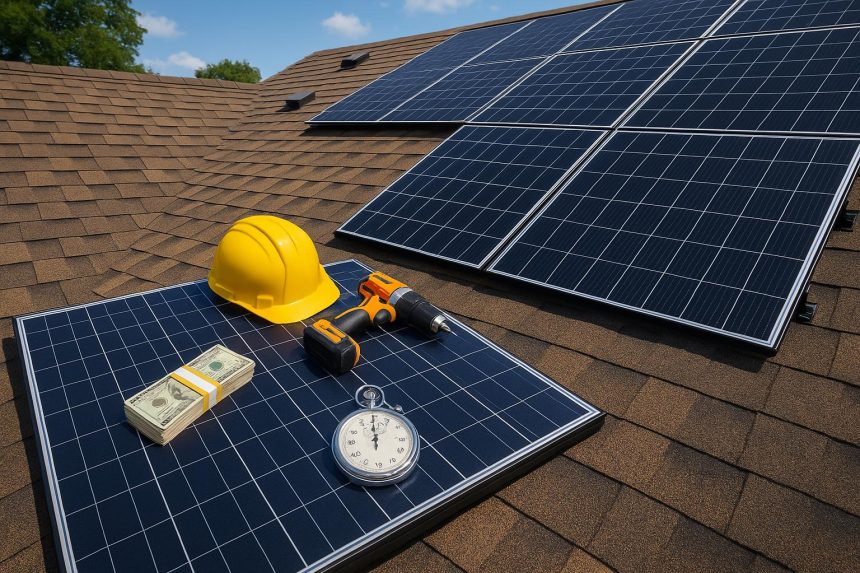
Homeowners planning both a roof replacement and solar installation face a critical decision: tackle these projects separately or coordinate them simultaneously. According to the National Renewable Energy Laboratory (NREL), combining these installations can reduce total project costs by 15-25% while cutting timeline delays by up to 60%. Understanding the financial and logistical advantages of synchronized projects helps property owners make informed decisions about their energy infrastructure investments.
The Cost-Stacking Problem of Sequential Projects
When roof replacement and solar installation occur as separate projects, homeowners encounter duplicated expenses that significantly inflate total costs. Each project requires independent permitting, inspections, mobilization, and contractor coordination. Permit fees alone can add $800-$1,500 in duplicated expenses when projects proceed separately.
Scaffolding and equipment rental represents another major duplicated cost. Both roofing and solar installations require roof access infrastructure, with rental costs typically running $1,500-$3,000 per project. Coordinated projects eliminate this duplication by sharing access equipment across both scopes of work.
Labor efficiency suffers dramatically in sequential scenarios. Roofing contractors must complete all work and demobilize before solar installers can begin. This gap creates scheduling inefficiencies, with solar installation often delayed weeks or months while waiting for roofing completion, inspection approval, and contractor availability.
Solar system removal and reinstallation costs present the most expensive sequential project scenario. Homeowners who install solar first and later require roof replacement face $3,000-$8,000 in system removal, storage, and reinstallation expenses. These costs provide zero incremental value, representing pure waste that coordinated planning eliminates entirely.
Financial Benefits of Coordination
Combined project bidding enables contractors to offer volume discounts impossible in separated scopes. Integrated contractors can reduce overhead allocation across both projects, passing savings to homeowners. Industry data suggests coordinated projects typically achieve 12-18% cost reductions compared to sequential project totals.
Single-contractor warranties cover both roof and solar systems under unified coverage terms. This integration eliminates the warranty confusion and finger-pointing that often occurs when roof leaks develop under solar installations. Coordinated warranties clearly establish responsibility and streamline any necessary repairs.
Financing advantages emerge from consolidated project costs. Lenders view comprehensive property improvements more favorably than piecemeal upgrades, often resulting in better terms and rates. Single loan origination also eliminates duplicated financing fees that sequential projects would incur.
Tax incentive timing optimization represents another financial advantage. The federal solar Investment Tax Credit provides 30% credit on eligible solar costs. By coordinating projects, homeowners can potentially include structural roofing improvements necessary for solar installation in the credited basis, maximizing tax benefits.
Timeline Efficiency Gains
Parallel construction activities dramatically compress project timelines. While some phases must proceed sequentially—roofing completion before solar installation—coordinated projects eliminate the gaps between independent contractor schedules. What might take 8-12 weeks as separate projects can often complete in 4-6 weeks when coordinated.
Unified permitting and inspection processes reduce administrative timelines. Many jurisdictions allow combined permit applications that undergo single review cycles rather than separate evaluations. This consolidation can cut permitting timelines from 4-6 weeks down to 2-3 weeks.
Material procurement coordination prevents project delays. Integrated contractors can synchronize roofing and solar equipment deliveries, ensuring all materials arrive when needed rather than creating storage challenges or installation delays due to supply timing mismatches.
Weather contingency management improves in coordinated projects. Rather than separate contractors each building weather delays into schedules, integrated project management can flexibly allocate resources between roofing and solar phases based on conditions, minimizing weather-driven timeline impacts.
Technical Advantages
Structural integration optimization occurs only when roof and solar systems are designed together. Engineers can specify roofing materials and structural reinforcements that specifically support planned solar installations, ensuring optimal load distribution and attachment methods. This integrated design prevents the compromises often necessary when retrofitting solar to completed roofs.
Waterproofing coordination ensures solar mounting penetrations receive proper integration with roofing systems. When the same contractor handles both scopes, flashing details and sealant applications around solar attachments can be integrated into roofing installation rather than added as afterthoughts. This integration significantly reduces future leak risks.
Optimal solar layout design benefits from roof planning flexibility. Qualified solar and roofing contractors can coordinate roof plane orientations, vent placements, and structural features to maximize solar installation efficiency. Sequential projects must work around existing roof configurations that may be suboptimal for solar placement.
Electrical system planning improves through coordinated design. Integrated projects can position electrical service upgrades, conduit runs, and junction box locations to serve both immediate roofing needs and solar system requirements. This foresight prevents the awkward cable routing often necessary when solar systems are retrofitted to completed roofs.
Risk Mitigation Benefits
Warranty liability clarity eliminates the disputes that plague sequential installations. When separate contractors install roofing and solar systems, roof leaks often trigger arguments about responsibility. Roofing contractors may claim solar penetrations caused the issue, while solar installers assert pre-existing roof defects are to blame. Unified project responsibility eliminates these disputes entirely.
Quality assurance improves through single-contractor accountability. Integrated contractors cannot blame other trades for defects or deficiencies. This clear responsibility incentivizes proper workmanship across all project phases and simplifies remediation if issues develop.
Insurance coverage coordination prevents gaps that can occur with sequential projects. When a single contractor handles both scopes, liability insurance clearly covers all work. Sequential projects may encounter coverage disputes when damage occurs during solar installation that affects completed roofing work.
Future maintenance coordination simplifies throughout system life. Rather than managing separate contractor relationships for roof and solar system maintenance, homeowners work with single providers who understand both systems and their interactions. This integration streamlines routine maintenance and emergency repairs.
When Coordination Makes Most Sense
Roofs approaching end-of-life represent ideal coordination scenarios. Properties with 10-15 year old roofs considering solar installation should seriously evaluate combined replacement and solar installation. The risk of needing roof replacement shortly after solar installation justifies upfront coordination even if current roofing remains functional.
New construction and major renovations provide natural opportunities for solar and roofing coordination. When properties already face significant construction activity, adding solar to roofing scope creates minimal additional disruption while capturing maximum coordination benefits.
Insurance claim scenarios present unique coordination opportunities. When storm damage necessitates roof replacement, homeowners can potentially include solar installation in restoration work. Insurance proceeds cover roofing replacement, while homeowners add solar scope, benefiting from contractor mobilization already occurring for insurance work.
Selecting Qualified Integrated Contractors
Not all contractors possess expertise in both roofing and solar installation. Homeowners should verify that coordinated-project contractors maintain proper licensing, insurance, and demonstrated experience in both disciplines. References from previous combined projects provide the best evaluation of contractor capabilities.
Manufacturer certifications indicate contractor quality and expertise. Premium roofing manufacturers require specific training and quality standards for certified installers. Similarly, solar equipment manufacturers certify installers meeting technical and business standards. Contractors holding both roofing and solar certifications demonstrate commitment to excellence across both disciplines.
Warranty terms provide insight into contractor confidence and quality. Extended warranties covering both roofing and solar work indicate contractor faith in their installation quality. Conversely, limited warranties or exclusions for coordinated work may signal capability limitations.
Project communication and management capabilities separate qualified integrated contractors from those merely offering bundled services. Successful coordination requires sophisticated project management that sequences work phases, coordinates inspections, and manages the inherent complexity of combined scopes. Detailed project timelines and milestone commitments demonstrate contractor organizational capability.
Making the Coordination Decision
Homeowners should conduct comprehensive cost-benefit analysis comparing coordinated versus sequential approaches. While coordination generally offers advantages, specific circumstances may favor alternative approaches. Properties with newer roofs in excellent condition may reasonably postpone roof replacement until necessary, even if solar installation proceeds immediately.
Timeline requirements influence optimal approaches. Homeowners facing urgent solar installation timelines—perhaps due to expiring incentive programs or immediate backup power needs—may proceed with solar installation even on older roofs, accepting future reinstallation costs as reasonable trade-offs for immediate solar benefits.
Financing availability affects feasible approaches. While coordinated projects offer financial advantages, they require larger upfront capital or loan capacity. Homeowners unable to secure adequate financing for combined projects may reasonably proceed with highest-priority work first, deferring secondary projects until financial capacity permits.
Understanding the comprehensive benefits of coordinated solar and roofing projects empowers informed decision-making. For most homeowners facing both needs within reasonable timeframes, project coordination delivers compelling financial, timeline, and technical advantages that justify planning these investments together rather than as separate undertakings.

Lynn Martelli is an editor at Readability. She received her MFA in Creative Writing from Antioch University and has worked as an editor for over 10 years. Lynn has edited a wide variety of books, including fiction, non-fiction, memoirs, and more. In her free time, Lynn enjoys reading, writing, and spending time with her family and friends.