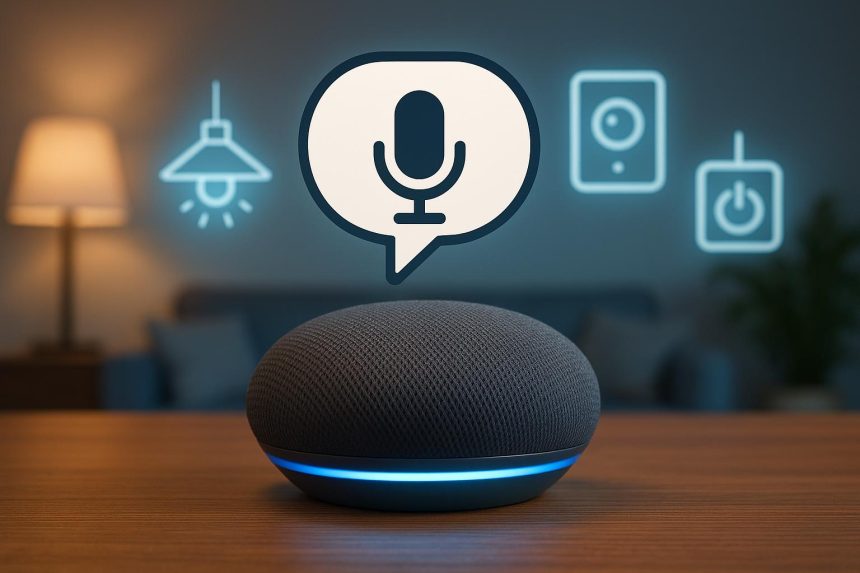
Compared to some of my friends, I was a latecomer to the home automation revolution. I originally thought of home automation as little more than a shiny toy with no real value. It was not until I saw a friend demonstrate the benefits of voice control that I started giving it a second thought.
I was thinking of that very thing when I woke up in the middle of the night (last night) feeling exceptionally warm. But because I had just installed a smart switch some 12 hours earlier, I issued a quick verbal command to turn on the ceiling fan without having to get out of bed. In just a few seconds, I was able to roll over and go right back to sleep.
Voice Control Has Come a Long Way
Admittedly, voice control was not all that stellar 10 years ago. I remember friends having to repeat commands over and over before their smart speakers got it right. But a lot has changed. Thanks to natural language processing and artificial intelligence, smart speakers do a better job than ever before.
This morning, I issued a verbal command to turn off both the ceiling fan and the overhead light in the master bedroom. As I spoke the command, I realized that I had inverted the names of the two devices. I was expecting to have to reissue the command after my smart speaker could not figure it out. Needless to say, I was delighted when both devices shut off despite me using the inverted device names.
I rarely touch a light switch these days. I converse while I’m walking around my house. I can also speak to turn on my TV and bring up the streaming service I want to watch. I can even voice various types of content.
DIY vs. Professionally Installed Systems
At this point, it’s important that I mention how my system works. I have built it from the ground up using an open-source home automation platform and devices from different manufacturers. My platform integrates with all my Amazon Echo smart speakers, exposing every device on my system to voice control.
Smart speakers from major brands are compatible with all sorts of devices. For example, I have sixteen smart switches fully compatible with Amazon Echo out-of-the-box. So even if I did not have an open-source platform that ties everything together, I could still operate those switches by voice.
If I had a professionally installed home automation and security system, voice control could be a mixed bag. Take Vivint Home Security, for example. Their systems are compatible with Google Home smart speakers and Nest thermostats. Any device within a Vivint system should be accessible via voice with a Google Home smart speaker.
I am not sure whether other brands support smart speakers from the major players. I would have to imagine they do, given the competitive nature of the home automation environment. But functionality might be limited from one brand to the next.
Still Room for Improvement
Do not misunderstand the point I am trying to make here. There is still plenty of room for improvement in terms of smart speakers and their relevance to home automation. But voice control has matured quite a bit. So much so that I can turn lights on and off, arm and disarm my cameras, change the thermostat temperature, and more merely by speaking.
Voice control has completely changed my view of home automation. To me, it is the main selling point. Now that I have experienced it, I have no desire to go back to living without it.

Lynn Martelli is an editor at Readability. She received her MFA in Creative Writing from Antioch University and has worked as an editor for over 10 years. Lynn has edited a wide variety of books, including fiction, non-fiction, memoirs, and more. In her free time, Lynn enjoys reading, writing, and spending time with her family and friends.